Research Scientist - Harvard University | Center for Astrophysics

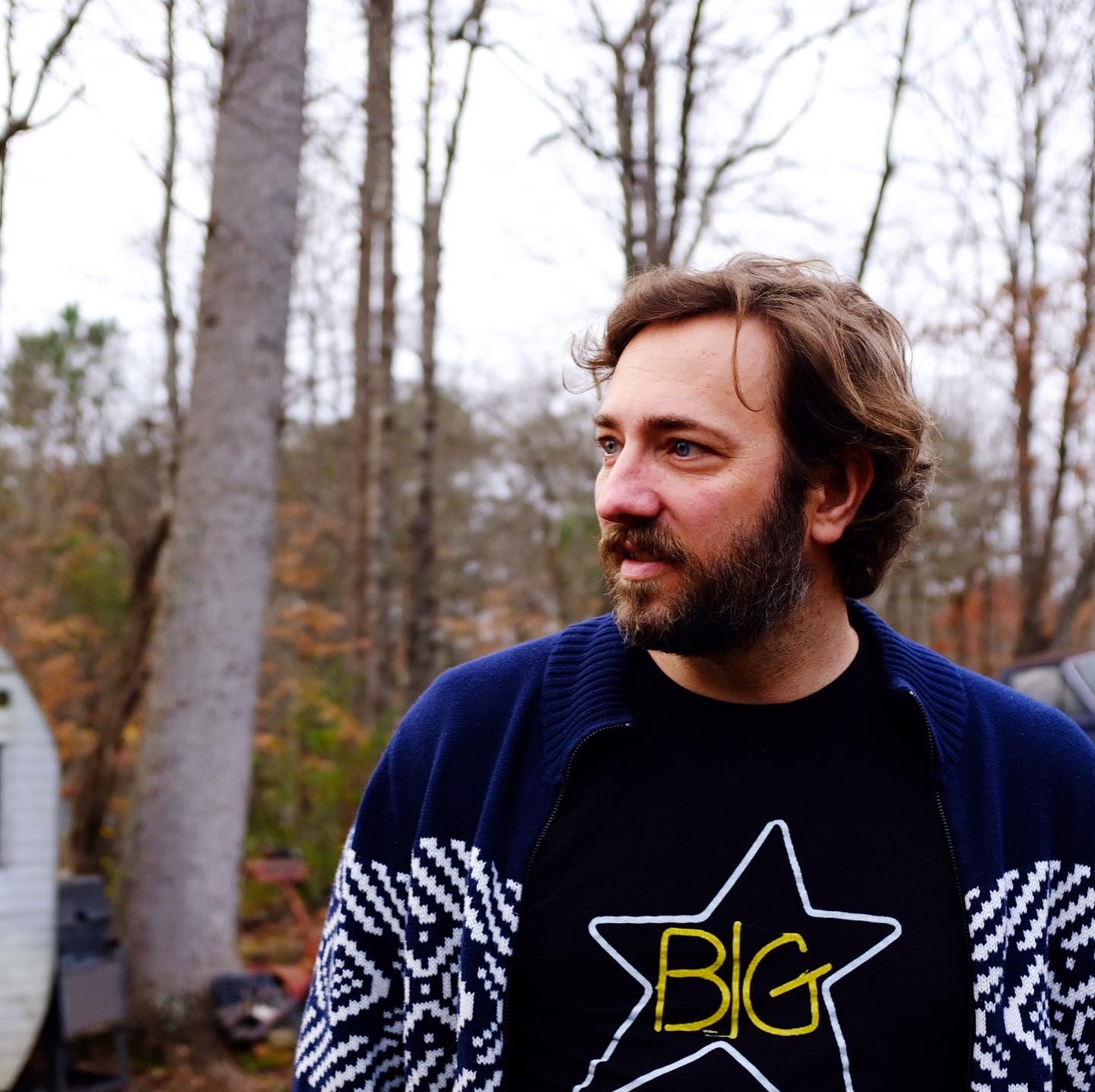
Phillip A. Cargile

Stellar astrophysics, spectroscopy, and scientific machine learning

My research focuses on unraveling the inner workings of stars—from modeling their structure and evolution to predicting accurate observable properties—and on developing more precise methods for measuring stellar parameters from modern astronomical surveys.

I build stellar-atmosphere and radiative-transfer models, machine-learning emulators, probabilistic inference tools, and survey pipelines that connect spectra, photometry, and astrometry to the temperatures, compositions, masses, ages, and distances of stars. I am a member of the Conroy research group and a co-founder and executive committee member of AstroAI at the Center for Astrophysics.

Phillip Cargile

Connecting the physics of stars to observations of the Milky Way.

My work links improvements in stellar models to faster computational methods, joint inference from heterogeneous data, and applications in large astronomical surveys.

  1. 01 Stellar physics Atmospheres, evolution, radiative transfer, and synthetic spectral grids
  2. 02 Calibration of stellar models Benchmark stars, empirical line calibration, and model validation
  3. 03 ML acceleration Neural emulation, generative models, and automatic differentiation
  4. 04 Stellar inference Joint modeling of spectroscopy, photometry, and astrometry
  5. 05 Survey science Galactic archaeology, Galactic dust, and exoplanet-host demographics

Radiative transfer & spectral modeling

Building more accurate stellar spectra

Fitting All the Lines

I lead a global empirical calibration of approximately 140,000 optical atomic and molecular lines against benchmark stellar spectra. The optimization adjusts wavelengths, oscillator strengths, and damping parameters while using stars across the HR diagram to separate line-data errors from shortcomings in the stellar models.

The CWC spectral grid

This Korg-based library will combine improved synthesis physics with the calibrated FAL line list and both regular and random sampling across the HR diagram. It is designed for individual-star inference, neural emulation, and applications such as future releases of FSPS.

Spectral-synthesis development

I develop and compare workflows spanning Korg, SYNTHE, and ATLAS12, integrating new physics, updated atomic and molecular data, and empirical calibration techniques.

Software development

Inferring the physical properties of stars

MINESweeper

I created and lead MINESweeper, which uses nested sampling to jointly model spectra, photometry, MIST stellar-evolution predictions, and astrometric priors, returning full posterior distributions for stellar properties.

uberMS

uberMS is a fully differentiable stellar model designed for gradient-based inference with HMC/NUTS and variational methods. Neural spectral emulation and automatic differentiation reduce analyses that required several hours per star to on the order of minutes.

The Payne

With Yuan-Sen Ting, I co-developed one of the earliest neural surrogate models for ab initio stellar spectra. The PyTorch framework makes high-dimensional physical spectral grids fast, compact, and differentiable enough for survey-scale inference.

Scientific surveys & collaborations

Mapping the Dusty Universe

Roman Galactic Plane Survey

I am developing the stellar forward models needed to infer physical properties from Roman's multi-band observations. Stars at different distances will then serve as probes for constructing detailed three-dimensional maps of interstellar dust across the Galactic plane.

SPHEREx Ices Investigation

I am developing stellar models for SPHEREx spectrophotometry that will help separate intrinsic stellar spectra from intervening absorption and contribute to the mission's Ices investigation, mapping water, carbon dioxide, and carbon monoxide ice across Galactic molecular clouds.

JWST Advanced Deep Extragalactic Survey

I collaborated with the NIRCam imaging team to process, register, and stack JADES and complementary GOODS-North and GOODS-South observations. This work resulted in the JADES Origins Field and supported searches for the highest-redshift galaxies known at the time.

View the full publication index on NASA ADS

From methods to scientific practice

  1. 01
    FoundationsAutomatic differentiation, probabilistic inference, and model evaluation
  2. 02
    Computational toolsPyTorch, JAX, GPU acceleration, and differentiable programming
  3. 03
    Scientific practicePhysical surrogates, generative models, validation, and trustworthy inference

Building AI literacy in astronomy.

Modern AI methods become useful in astronomy when researchers understand both the underlying tools and their scientific failure modes. I co-founded AstroAI at the Center for Astrophysics and serve on its executive committee, helping build a community around machine learning, statistics, scientific computing, and astrophysics.

My teaching connects core concepts to working implementations and emphasizes validation, interpretability, and the physical assumptions behind the models.

December 2025 · NASA Cosmic Origins AI/ML STIG Autodifferentiation, PyTorch, and JAX
June 2026 · AstroAI Workshop Accelerated Computation with Automatic Differentiation: AD/PyTorch/JAX
Explore AstroAI

Interested in stellar modeling, survey science, or scientific machine learning?

I welcome conversations about research collaborations, shared software, and opportunities at the intersection of physical modeling, astronomical data, and machine learning.